LGBTQ+ Co-Living in NYC: Finding Welcoming Shared Housing

May 14, 2026 | By Zack Schoem
LGBTQ+ Co-Living in NYC: Finding Welcoming Shared Housing
If you’re LGBTQ+ and looking at co-living in NYC, the first thing worth saying is that you already know the standard pitch — NYC is diverse, NYC is welcoming, NYC has a long queer history. That’s all true, and it’s also not particularly useful when you’re trying to figure out whether the specific three-bedroom in Bushwick you’re applying to will actually be a place you feel comfortable coming home to at the end of the day.
This guide is for the practical version of that question. It covers what legal protections actually do (and don’t) cover, which neighborhoods have real LGBTQ+ density and community rather than just marketing copy, how to evaluate the roommate-matching conversation with a co-living operator, and the specific considerations that apply to trans and nonbinary renters and to LGBTQ+ people from international or less safe backgrounds
The Legal Floor vs. the Practical Reality
NYC has some of the strongest housing discrimination protections in the United States. Under the NYC Human Rights Law and New York State Human Rights Law, it is illegal for landlords, brokers, or housing operators to discriminate on the basis of sexual orientation, gender identity, gender expression, or status as a transgender person. This applies to rental decisions, lease terms, roommate-matching policies, and the day-to-day operation of a rental.
That’s the floor. It matters — if something goes wrong, you have real recourse through the NYC Commission on Human Rights, and complaints are taken seriously. But legal protection isn’t the same thing as a living situation that actually works. The practical version of the question is: in a shared apartment with two or three roommates, will you feel comfortable bringing a partner home, hanging a pride flag in the living room, being openly yourself in the kitchen at 11 p.m.? That’s not a legal question. That’s a housemate question.
Neighborhoods with Real LGBTQ+ Community
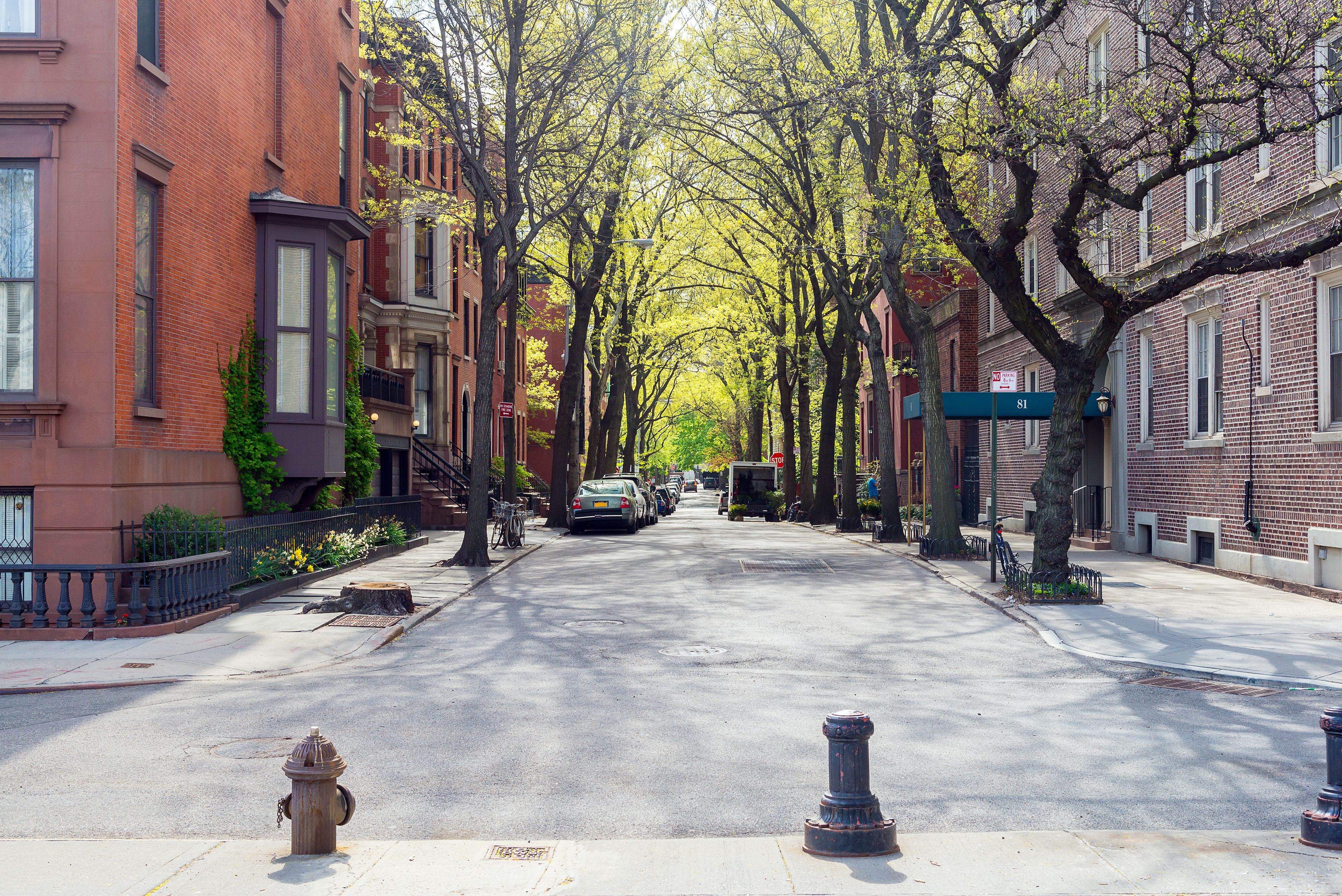
Every NYC neighborhood is legally welcoming. Not every neighborhood has the LGBTQ+ density — the bars, the community organizations, the visible population, the established social networks — that makes daily life feel like a community rather than a tolerance. The following neighborhoods do, each with a different character:
Hell’s Kitchen and Chelsea
The two most visibly gay neighborhoods in Manhattan, with overlapping but distinct personalities. Hell’s Kitchen skews younger, with a higher density of bars and nightlife along 9th Avenue. Chelsea is historically the center of gay Manhattan; the community is older on average now as rents have risen, and the nightlife has partly relocated north, but the neighborhood identity remains. For Manhattan-based professionals who want a neighborhood where LGBTQ+ life is part of the everyday texture, these are the two default choices.
West Village
Historically and culturally foundational — the Stonewall Inn is here, and so is decades of queer history. The neighborhood is now one of the most expensive in Manhattan and primarily older, wealthier residents, which affects the practical co-living equation. Significant community infrastructure and a meaningful LGBTQ+ population remain, but it’s no longer where most LGBTQ+ renters in their twenties and thirties end up living.
Bushwick and Bed-Stuy
The current center of gravity for young LGBTQ+ life in NYC, particularly for queer people of color and for trans and nonbinary communities. Bushwick specifically has an unusually high concentration of queer and trans community spaces — bars, galleries, performance venues, mutual aid networks — that you won’t find at the same density in Manhattan. Bed-Stuy overlaps significantly. Co-living inventory is strong in both neighborhoods and prices are meaningfully lower than Manhattan equivalents.
Jackson Heights, Queens
One of the most historically significant Latine LGBTQ+ neighborhoods in the United States, with an annual Queens Pride parade that’s among the largest in the city. The community is more residential and family-oriented than the nightlife-heavy neighborhoods in Manhattan and Brooklyn. A particularly good fit for LGBTQ+ immigrants, Latine LGBTQ+ renters, and anyone who values community over scene.
Astoria, Queens
Significant LGBTQ+ population, lower rent than Manhattan, direct N/W train access to Midtown. Less dense community infrastructure than Bushwick or Jackson Heights but a solid landing spot for someone who wants LGBTQ+-welcoming neighbors without the Bushwick nightlife density.
You can browse current co-living inventory across these neighborhoods. Filter by neighborhood and check individual listing details.
The Roommate Question
In co-living, the building policy is easy — it’s the same legal baseline across NYC, and reputable operators have clear non-discrimination policies on top of that. The harder question is who you’ll actually be living with, and how the matching process handles LGBTQ+ considerations. A few things to look for:
Whether the operator asks the right questions
A good co-living operator’s application process should include the option to share information about identity, pronouns, and roommate preferences — not as a requirement, but as a signal that they take matching seriously. If an application has nowhere to indicate preferred name vs. legal name, no pronoun field, and no mechanism to note LGBTQ+-welcoming preferences, that’s information about how carefully they think about the matching problem.
How operators respond to direct questions
The most useful thing to do during an application is to ask directly. “How does your matching process handle LGBTQ+ considerations? Do you match LGBTQ+ renters with each other by preference, with other LGBTQ+-welcoming roommates regardless of orientation, or something else?” A clear, specific answer is a good sign. A vague “we don’t discriminate” response is technically correct and practically useless — every operator will say that, and it doesn’t answer the question.
The existing roommates
If you’re joining an apartment where other residents are already living, ask about them. Not their names or personal details, but the context: their rough ages, their professions, and whether any have indicated LGBTQ+ identity or preferences on file. Co-living operators that maintain this information as part of roommate matching will answer the question. Those that don’t maintain it won’t, which is also useful to know.
For more on how roommate dynamics in co-living actually work day-to-day, our guide to co-living covers the general playbook — the general advice applies here, with LGBTQ+-specific considerations layered on top.
Trans and Nonbinary-Specific Considerations
The co-living experience for trans and nonbinary renters involves a distinct set of questions that don’t always apply to cis LGB renters. Worth addressing directly:
Name and ID on the application
Most rental applications, including co-living applications, require ID verification for background checks. If your legal name doesn’t match your current name, the mechanics of how this is handled matter. Good operators will let you provide a preferred name for all communication while using your legal name only where required (background checks, lease documents). Ask upfront how this is handled. If the answer is “we’ll use your legal name throughout,” that’s useful information.
Bathrooms in shared apartments
Most NYC co-living apartments have two to three bathrooms for three to five residents. Bathroom dynamics are typically schedule-based rather than gendered — there’s no “boys’ bathroom” and “girls’ bathroom” in a shared apartment. In practice this makes co-living structurally simpler for trans and nonbinary residents than living situations that enforce gendered facilities. If an apartment is marketed as gender-specific (some are, and that’s explicitly permitted for roommate situations), ask what that means for trans and nonbinary eligibility.
Pronouns in roommate matching
Whether an operator tracks and shares pronouns as part of the matching process is a reasonable thing to ask. Many still don’t, though the best ones do. A practical workaround: when you’re being introduced to an apartment, ask the operator to share your pronouns with prospective roommates in advance. This saves the awkward first-meeting clarification and filters the situation before you’ve committed.
If a roommate becomes a problem
If a roommate is harassing or misgendering you, the co-living operator is your first line of recourse — not the building, not the police. A reputable operator will move either you or the problem roommate to a different apartment, with relocation typically happening within days for serious cases. Roomrs handles these situations through customer support, and the operator’s response time and willingness to relocate a problem roommate is a meaningful differentiator between operators.
International LGBTQ+ Students and Workers
If you’re coming to NYC from a country where being LGBTQ+ is criminalized or socially unsafe, the housing question is layered on top of a much larger transition. A few practical resources and considerations:
- The NYC Anti-Violence Project and Immigration Equality both work specifically with LGBTQ+ immigrants and can help with immigration-adjacent legal questions that intersect with housing.
- If you’re a student, check whether your university has a specific LGBTQ+ resource center — Columbia’s Gender-Based Misconduct Office, NYU’s LGBTQ+ Center, and similar offices at most major NYC universities have staff who can navigate both university housing systems and private-market referrals.
- Co-living operators generally don’t ask about immigration status beyond basic rental eligibility (proof of identity, proof of visa or work authorization, proof of funds). Standard documentation for international students or workers applies; the fact that you’re LGBTQ+ doesn’t require any additional documentation or disclosure.
- If you’re coming from a country where LGBTQ+ identity is dangerous, you may not want your full personal history accessible to your new roommates. That’s normal and reasonable. Disclose what you’re comfortable with and nothing more. A good co-living operator will respect that.
If Something Goes Wrong
Housing discrimination and harassment still happen in NYC, even with strong legal protections. If you experience it:
- File a complaint with the NYC Commission on Human Rights (CCHR) at nyc.gov/cchr or by calling 311. The CCHR handles complaints about housing discrimination based on sexual orientation, gender identity, and gender expression, among other protected categories. Complaints are free to file and don’t require a lawyer.
- For active harassment or safety concerns, the Anti-Violence Project’s 24/7 hotline (212-714-1141) is the appropriate first call. They provide support, resources, and connections to legal aid.
- Document everything. Texts, emails, photos, witness names. If you end up pursuing a formal complaint or legal action, documentation is what makes the case.
- Contact the co-living operator first for issues with a roommate or apartment. They have a material interest in resolving conflicts quickly and typically can do so faster than a formal complaint process.
Starting the Search
The honest summary: LGBTQ+ co-living in NYC works well when you find the right operator, the right neighborhood, and the right roommate match. None of those are automatic. All three are things you can evaluate during the application process if you ask the right questions and pay attention to the quality of the answers.
When you’re ready to browse current options, start with our available co-living inventory and filter by neighborhood based on where you want to land. If you’re weighing co-living against other living arrangements more broadly, our overview of the co-living lifestyle covers the general decision framework — the LGBTQ+-specific considerations above layer on top of that.
